


Alignerr AI interview: how the Zara interview works and how to prepare
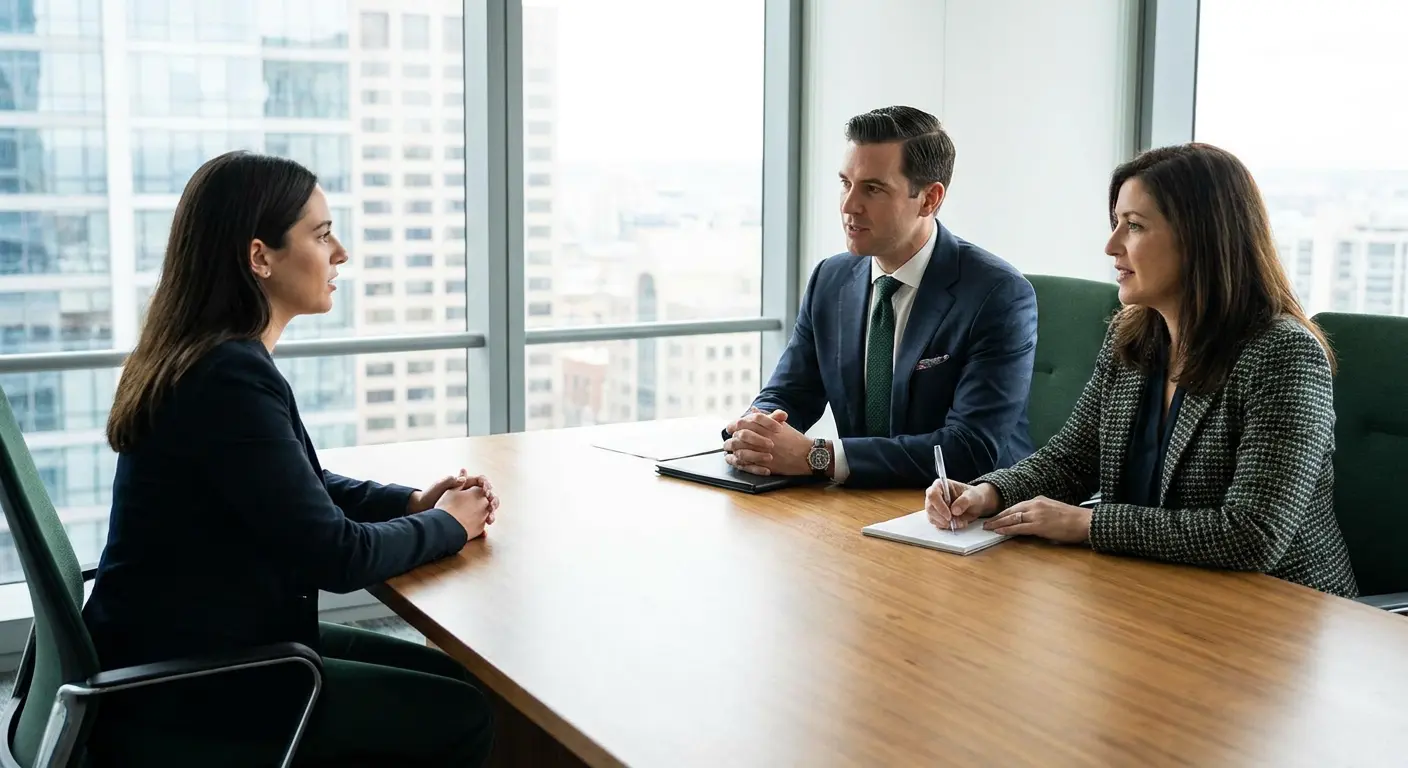
Some Alignerr jobs add a step after you apply: an interview with Zara, Alignerr's AI interviewer. It is a recorded spoken conversation about your background and, for expert roles, your field. Here is what Alignerr's own pages say about it, and how to rehearse out loud before it counts.
Free: 1 full practice interview a day, no card.
Facts checked against Alignerr's own pages on
Colloqa is not affiliated with Alignerr or Labelbox, and we have no inside knowledge of how Zara scores you. Every fact about the interview below comes from Alignerr's own pages and help center, linked next to it; where they don't say something, we say so. The example questions are ours — Alignerr does not publish its questions.
What the Alignerr AI interview is
Alignerr is a network of experts and generalists who create training data for AI labs, run by Labelbox. You work as an independent contractor. Not every job has an interview: Alignerr says some jobs require a Zara interview or domain assessments, and you are told if yours does.
- Format
- A dialogue with Alignerr's AI assistant Zara, conducted by AI and recorded on video. Your camera has to be on. Alignerr describes it as a preliminary check of your background, used to place you on projects that suit your skills. Its terms say the recording may be used to train or improve AI technology. (source)
- Language and length
- Job listings describe a screening with Zara in English about your background and experience; some language roles hold a short AI interview in the language of the role instead. Alignerr does not publish how long the interview takes. (source)
- Questions
- Alignerr says every interview is different: the questions are based on your profile, your experience and your answers during the interview, and it does not give out a list. Expert roles can add a domain-specific Zara interview, and coding interviews can include live coding. If a question touches something you can't discuss, you can ask Zara to skip it. (source)
- Rules
- AI tools, external resources and any outside help are prohibited during the interview. The interview is marked as failed if your camera is not enabled, and you are asked to stay in full-screen mode the whole time. Alignerr also warns that looking away or using hand signals could flag the system. (source)
- Device and setup
- A desktop or laptop with a working webcam and microphone — mobile devices are not supported. Alignerr recommends Google Chrome in an incognito window, a quiet place and headphones or a noise-cancelling microphone. (source)
- Retakes
- Plan for one attempt. Alignerr's help articles disagree on the detail: one says a retake is allowed only if you had technical difficulties, through support; another says retaking is not currently allowed. Neither offers a retake to improve a result, and you cannot ask support for more interviews. (source)
- Other assessments
- Depending on the job: domain assessments, a language test or a voice sample, which you are prompted to complete as part of the application. Identity verification through Persona and contract and billing setup are separate onboarding steps. (source)
- After the interview
- If you pass, you move on to onboarding automatically. Alignerr says it does not provide individual interview results or feedback. Passing does not guarantee work: projects depend on customer demand and are matched to your skills, assessment results and availability. (source)
How the process runs
- Sign up and upload your resume. Keep the file plain. Alignerr says the "Error Loading Interview" message usually comes from the resume file, and advises against emojis and images in it.
- Apply for a job. Each job has its own steps. If yours needs a Zara interview or an assessment, you are notified and prompted to continue.
- Set up before you start. Desktop or laptop, Chrome, camera and microphone tested, other tabs closed, a quiet room. Alignerr suggests headphones.
- The interview with Zara. A spoken conversation on camera, in full-screen mode. Zara asks about your background and experience and builds the next question on what you said; expert roles go into the field itself.
- Any further assessments. A domain test, a language test or a voice sample, if the job requires one.
- Onboarding, if you pass. Identity verification, then contract and billing setup, then Alignerr onboarding. After that you wait to be matched with a project.
The kinds of questions to expect
Alignerr does not publish its questions, and says each interview is built from your profile and your answers. So there is no list to memorise. These are the kinds of questions its pages describe, with examples written by us to practise with.
Your background and experience
What the screening interview is for. Expect follow-ups on whatever you say.
- Walk me through your background and the work you do now.
- Which project on your resume best shows your expertise, and what was your part in it?
- Why are you interested in AI-training work?
Your field (expert roles)
A domain-specific interview checks whether you can reason in your subject, not recite it.
- Explain a concept from your field that people often get wrong, and why.
- Describe a problem you solved recently and how you checked that the answer was right.
- How would you explain this topic to someone outside the field?
Judging and explaining work
The job itself is evaluating and improving AI output, so expect to be asked how you assess quality.
- How do you decide whether an answer is correct, complete and well reasoned?
- Tell me about a time you reviewed someone else’s work and found a subtle error.
Language roles
Alignerr says language interviews are mostly held as a live conversation in that language.
- Tell me about your day-to-day use of this language at work.
- Describe something you read recently, and what you thought of it.
Zara follows up on your answers, so a prepared script will not carry you. Know your own resume well enough to go two or three questions deep on anything in it.
How to prepare for the Alignerr interview
- Treat it like a regular interview. That is Alignerr's own first tip. It is a screening by an AI, but it is recorded and it decides whether you move on.
- Test the setup before you start. Desktop or laptop, Chrome, camera and microphone working, a quiet room. A phone will not work, and a camera that is off fails the interview.
- Stay on screen and look at the camera. Stay in full-screen mode and keep eye contact with the camera. Alignerr warns that looking away or using hand signals could be flagged.
- Leave short pauses and do not talk over Zara. Alignerr advises pausing briefly so Zara can process your answer, and says speaking at the same time as the assistant can cause pauses that affect your final score.
- Do not use AI tools or notes from outside. Any use of AI tools, external resources or outside assistance is prohibited during the interview. Prepare beforehand instead.
- Know your resume in depth. The questions are built from your profile and your answers. For each role and project you list, be ready to say what you did, why, and what came of it.
- Practise explaining your field out loud. For expert roles, pick five or six core topics and explain each in two minutes without notes. Reasoning aloud is a different skill from knowing the material.
- Rehearse with something that follows up. An interviewer that asks "why" and "can you be more specific" is the closest thing to what Zara does. Answer out loud, not in your head.
Practising for Zara with Colloqa
Alignerr’s pages do not describe a practice mode for the Zara interview, and it treats the interview as a single attempt. So the rehearsal has to happen somewhere else.
Colloqa is an AI interviewer that asks you questions out loud and follows up on what you say, then gives feedback. It is not Zara and does not copy Alignerr's rules or scoring — use it to get used to answering an AI interviewer aloud and to make your explanations hold up under follow-ups.
- Your field, your resume. Set up the interview for your role and level, or paste a job description, and the questions are built around it.
- Follow-ups. The AI interviewer asks "why" and "give me an example" when an answer is vague — the same pressure as an interview that adapts to your answers.
- Repetition. Run the interview again until your explanations are tight. The free plan is 1 full session a day, no card.
- Feedback on how you answered. After each session: what worked, what fell apart and the one thing to drill next, plus a skill profile tracked across sessions. The detailed written feedback is part of the paid plan.
- 12 languages. Useful for language roles: practise in the language the interview will be held in.
Get used to answering an AI interviewer out loud before the one that counts: one full practice session a day is free.
Practise with an AI interviewerAlignerr AI interview: questions applicants ask
A recorded video interview in which Zara, Alignerr's AI interviewer, talks with you about your background and experience and, for expert roles, your field. Alignerr calls it a preliminary check used to place you on projects that suit your skills. Not every job requires it.
Alignerr and Labelbox describe Zara as their own AI interviewer. micro1, a different company, also has an AI recruiter called Zara. Neither company's pages say the two are the same tool, so don't assume the details of one interview apply to the other.
Alignerr does not publish a length. Some job listings call it "a short Alignerr AI interview". Set aside uninterrupted time and a quiet room, because you are expected to stay in full-screen mode throughout.
There is no fixed list. Alignerr says the questions are unique to each person and are based on your profile, your experience and your answers during the interview. Expect questions about your background, and for expert roles questions in your field; coding interviews can include live coding.
Treat it as one attempt. Alignerr's help articles disagree: one allows a retake only after technical difficulties, arranged through support, and another says retaking is not currently allowed. Neither offers a retake to get a better result.
No. Alignerr says any use of AI tools, external resources or outside assistance is strictly prohibited during the interview. Your camera must be on and you are asked to stay in full-screen mode.
No. Alignerr says to use a desktop or laptop computer; mobile devices are not supported. It recommends Google Chrome, ideally in an incognito window so extensions do not interfere.
If you pass, you proceed to onboarding automatically — identity verification, contract and billing setup. Alignerr says individual interview results and feedback are not provided. Passing does not guarantee work: projects depend on customer demand.
Prepare to talk through your resume and your field out loud, with follow-ups. An AI interviewer that asks "why" and "give me an example" is good practice — for example Colloqa, where one full session a day is free.
No. Colloqa is an independent interview-practice tool. We describe the interview from Alignerr's public pages so you can prepare; our AI interviewer is not Zara and our questions are not Alignerr's.
Keep preparing
- micro1 AI interview prep (Zara)
- Mercor AI interview prep
- HireVue interview practice
- Spark Hire interview practice
- Software engineer interview practice
- Behavioral interview questions and the STAR method
- How long should an interview answer be?
- AI mock interview with follow-up questions
- AI mock interview tools compared
Sources
- Alignerr — Process
- Alignerr — FAQs
- Alignerr Help Center — Alignerr Interview FAQs
- Alignerr Help Center — Getting Started!
- Alignerr Help Center — How can I troubleshoot a Zara interview after encountering technical issues?
- Alignerr — Privacy policy and terms (Interview; Release)
- Alignerr Help Center — When and how will I be assigned to a new Alignerr project?
- Alignerr — Job listings
- Labelbox blog — Zara™, the AI interview tool